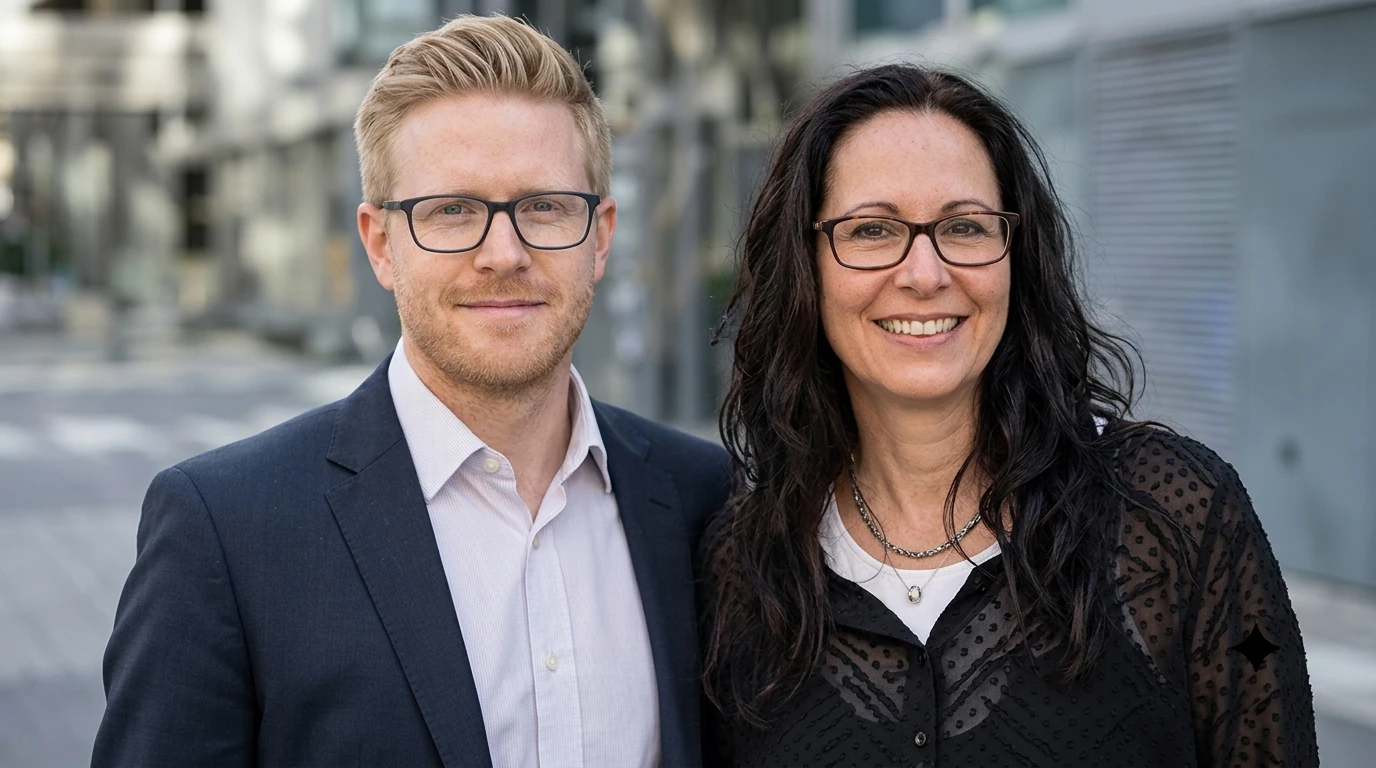
Brody C. Tate has built his public record in higher education rather than entertainment. His work has touched online graduate programs, student learning portfolios, ethical data science education, and research into how queer students experience representation and belonging in academic settings. Although many people encounter his name through reported links to comedian and actor Janeane Garofalo, the most substantial verified information about Tate concerns his professional and scholarly career.
That distinction matters because online biography pages often present uncertain personal claims as established fact. Tate has not cultivated a highly visible public persona, and basic details such as his birth date, age, birthplace, parents, and financial position have not been reliably disclosed. A responsible biography must therefore focus on what is documented while being clear about what remains private.
Early Life and Family
Brody Tate’s early life is not well documented in reliable public sources. His full date of birth, hometown, nationality, parents’ names, and details about any siblings are not publicly confirmed. Some biography websites offer estimates or unsourced claims, but those details cannot be treated as established parts of his life story.
The lack of personal information appears consistent with Tate’s broader public profile. He is known through universities, scholarly work, and professional events rather than interviews about his upbringing or family background. He has not used his career to become a public personality, and there is no verified account of his childhood ambitions or the experiences that first led him toward education.
What can be inferred from his later work is that questions of identity, place, and belonging became central to his academic interests. His scholarship has examined queer identity in graduate education and the experiences of queer students from rural backgrounds. Those subjects may reflect sustained professional and intellectual concerns, but they should not be treated as direct evidence about his own childhood unless he has said so publicly.
Education and Academic Development
The clearest verified educational milestone in Tate’s biography is his Doctor of Education degree from Loyola University Chicago. In 2025, Loyola’s institutional repository published his dissertation, “Mirrors and Windows: Exploring Queer Identity Representation in Graduate Curriculum.” The work was completed through the university’s School of Education.
His dissertation studied how queer graduate students understood their representation within academic curricula. Tate used a narrative ethnographic approach and drew on Queer Theory as well as educator Emily Style’s idea of curriculum functioning as both “windows” and “mirrors.” In that framework, students should encounter material that helps them understand other lives while also seeing their own identities and experiences reflected.
The study found that queer graduate students often struggled to locate meaningful representations of themselves in assigned readings, examples, and course discussions. Tate argued that graduate programs should do more than issue broad statements about inclusion. Their curricula should include queer perspectives as a normal part of academic knowledge rather than treating them as occasional additions.
The dissertation brought together several themes that had already appeared in his work: student belonging, curriculum design, identity, and the responsibility of institutions to make learning visible and relevant. It also marked an important step in his development from education program professional to doctoral researcher.
Early Career in Student Learning
Before his publicly documented work at the University of Chicago, Tate was associated with Loyola University Chicago’s learning portfolio initiatives. A case study published by the education technology company Digication identified him as a Learning Portfolio Manager at Loyola.
Learning portfolios allow students to collect academic work, document progress, and reflect on how their thinking changes over time. They can include essays, projects, research, professional materials, and personal reflections. Tate’s role placed him within a part of higher education concerned with helping students understand their education as more than a sequence of grades and completed courses.
His comments in the case study emphasized student ownership. Rather than leaving assignments scattered across separate classes or digital systems, students could retain work and use it to tell a coherent story about their learning. That approach supported both reflection and practical goals, including career preparation and the presentation of skills to employers.
This work also anticipated the questions he later explored in his doctoral research. Portfolios ask students to decide which parts of their experience deserve to be seen. His dissertation asked whether graduate curricula allow queer students to see themselves in the knowledge their institutions present as valuable. In both cases, Tate’s attention centered on recognition, reflection, and the student’s place within an educational system.
Work at the University of Chicago
By 2025, the University of Chicago Data Science Institute publicly identified Brody Tate as an Online Program Manager for its Master of Science in Applied Data Science team. The role connected his background in student learning and program design with a rapidly changing technical field.
Online program management involves more than delivering courses through a digital platform. It can include coordinating faculty, supporting students, shaping program operations, monitoring the online learning experience, and helping ensure that remote students receive the same academic expectations and institutional support as campus-based students.
Tate’s public association with the program became especially visible during the 2025 UPCEA Conference. He joined colleagues from the University of Chicago for a roundtable on ethical data science in higher education. The discussion addressed how universities should respond to growing concerns about artificial intelligence, data collection, automated systems, and the responsibilities of people who create or interpret data-driven tools.
The team presented a framework built around ethical collection, ethical consumption, and ethical interpretation of data. This approach recognized that technical ability alone is not enough. Students also need to understand where data comes from, how it may reflect bias, how conclusions can be misread, and what harm may follow from careless decisions.
Tate’s involvement placed him within a wider debate that became urgent across universities during 2024 and 2025. Generative AI changed how students approached writing, analysis, programming, and research. Institutions had to decide how to teach responsible use without relying only on bans or punishment. His work in this setting reflected an interest in practical educational structures as well as broader questions of ethics.
Research on Queer Identity, Rurality, and Belonging
Tate’s scholarly interests extend beyond his dissertation. His academic profile includes work on queer identity, rurality, and belonging, especially within educational settings. These subjects address a group of students whose experiences are often reduced to simple assumptions.
Queer students from rural communities may face limited local resources, social isolation, or pressure to conceal parts of their identity. Yet rural life can also provide community, attachment to place, family connection, and forms of belonging that are lost when researchers describe rural areas only as places to escape.
Tate has contributed to published work examining how colleges can better support queer students from rural backgrounds. That research considers the transition from rural schools and communities into higher education, where students may encounter greater acceptance but also class differences, cultural misunderstandings, or assumptions that they should reject their rural identities.
He has also been credited on work exploring queer joy in nature. That focus offers a different approach from research centered only on discrimination and hardship. It recognizes that queer rural lives may include pleasure, connection, memory, and a strong relationship with the natural world.
Across these projects, Tate’s scholarship asks institutions to avoid treating identity as a single category. A queer student may also be rural, working-class, religious, disabled, or connected to a particular region. Those parts of a person’s life do not disappear when they enter a classroom.
Reported Marriage to Janeane Garofalo
Brody Tate is widely described online as the husband of Janeane Garofalo, the American comedian, actor, and political commentator. Several entertainment-oriented biography sites report that the couple married in 2015. However, reliable primary documentation of the relationship is limited, and neither Tate nor Garofalo has made the marriage a major part of a public media profile.
For that reason, the relationship should be described carefully. The claim has circulated widely, but many websites repeat the same information without identifying an interview, marriage record, or direct statement from either person. The exact wedding date and circumstances are therefore not publicly confirmed through strong open sources.
Garofalo has long guarded much of her private life. Her earlier marriage to writer and producer Rob Cohen became public in an unusual way. The two had taken part in what they believed was a nonbinding Las Vegas ceremony in the 1990s, only to discover years later that the marriage had been legally valid. It was dissolved in 2012.
Tate has not appeared to seek attention through his reported connection to Garofalo. There are few joint interviews, public appearances, or detailed accounts of their domestic life. No children have been publicly confirmed, and claims about their home, family routines, or relationship history should not be repeated without stronger evidence.
Age, Birthplace, and Personal Details
Brody Tate’s age is not publicly confirmed. No dependable source provides a verified date of birth, and estimates published on celebrity biography websites vary. Without an official biography, direct interview, or public record that can be confidently attributed to him, any precise age would be speculation.
His birthplace and nationality are also not clearly documented in authoritative sources. His academic and professional work has been based in the United States, including positions connected to Loyola University Chicago and the University of Chicago. That establishes his American professional base, but it does not confirm where he was born or raised.
Other commonly searched details, including his height, religion, ethnicity, and residence, are private or unsupported. Such information often appears on automated biography pages even when no source is given. Tate’s documented work provides a far more reliable basis for understanding him than personal measurements or demographic guesses.
Net Worth and Income Sources
Brody Tate’s net worth is not publicly confirmed. There are no credible financial disclosures, business filings, contract reports, or interviews that establish his personal wealth. Exact figures presented by entertainment websites should therefore be treated as unsupported estimates.
His known income sources are connected to higher education. His career has included program management, learning portfolio work, online graduate education, research, writing, and conference participation. Academic publications may add professional recognition, but scholarly chapters and dissertations generally do not provide the kind of income associated with commercial publishing or entertainment contracts.
Tate is not known as a business owner, investor, celebrity performer, or public-company executive. There is also no verified evidence of major property holdings, endorsement deals, or other ventures that would allow a responsible estimate of his finances. The honest answer is that his salary and net worth remain private.
Public Image and Professional Reputation
Tate’s public image is restrained and work-focused. Unlike many people who become subjects of online biographies, he has not built a following around social media, personal branding, or frequent press appearances. Most credible references to him come from university repositories, academic publishers, education companies, and professional conference coverage.
His work suggests a professional reputation centered on student experience and institutional responsibility. Whether working with portfolios, online programs, queer graduate students, or ethical data science, he has focused on how educational systems affect the people moving through them.
That consistency gives his career a clear shape even though many biographical details are unavailable. Tate’s public contribution lies in asking universities to think more carefully about whose knowledge appears in the curriculum, how students make meaning from their work, and what ethical preparation should accompany technical education.
Recent Work and Current Status
The latest clearly documented developments in Tate’s career come from 2025. That year, Loyola University Chicago published his doctoral dissertation, confirming the completion of his EdD. He was also identified by the University of Chicago Data Science Institute as an Online Program Manager with the MS in Applied Data Science team.
His participation in the 2025 UPCEA Conference showed continued involvement in national conversations about online education and data ethics. The event placed him among higher education professionals working through the practical consequences of artificial intelligence and changing expectations for technical programs.
As of 2026, no major career change, new public appointment, or departure from higher education has been reliably confirmed. His current day-to-day role may have changed since the latest institutional references, but available evidence continues to define him as an education professional and scholar.
Frequently Asked Questions
Who is Brody Tate?
Brody C. Tate is an education professional and scholar associated with Loyola University Chicago and the University of Chicago. His work has focused on online graduate education, student learning portfolios, queer identity, rural student experience, curriculum, and belonging.
How old is Brody Tate?
Brody Tate’s exact age is not publicly confirmed. Reliable sources do not provide a verified date of birth, so online age estimates should not be treated as fact.
What does Brody Tate do for a living?
Tate has worked in higher education program management and student learning. In 2025, the University of Chicago identified him as an Online Program Manager for its Master of Science in Applied Data Science team.
What did Brody Tate study?
Tate earned a Doctor of Education degree from Loyola University Chicago. His 2025 dissertation examined how queer graduate students experience identity representation in academic curricula.
Is Brody Tate married to Janeane Garofalo?
Brody Tate is widely reported to be Janeane Garofalo’s husband, with many online sources claiming a 2015 marriage. The relationship has not been extensively documented through primary public sources, so specific details about the marriage remain private or not fully confirmed.
Does Brody Tate have children?
No children have been publicly confirmed. Tate has kept his family life private, and there is no dependable public information establishing that he has children.
What is Brody Tate’s net worth?
His net worth is not publicly known. He appears to earn his income through higher education and academic work, but no credible evidence supports a precise financial estimate.
Conclusion
Brody Tate’s biography is defined less by public exposure than by sustained work inside higher education. His record shows an interest in the structures that influence whether students feel recognized, supported, and prepared for the responsibilities attached to their fields.
His research on queer graduate students and rural belonging adds depth to discussions that universities often handle through broad institutional language. By focusing on curriculum and lived experience, he has examined how inclusion succeeds or fails in the ordinary materials and decisions that shape a student’s education.
Public interest in Tate may continue to be driven partly by his reported relationship with Janeane Garofalo. Yet his professional life stands on its own. His work in education, program management, and scholarship offers the clearest and most meaningful account of who he is.
Much of his personal history remains private, and that boundary deserves respect. The verified record presents Brody Tate as a thoughtful education professional whose career has centered on making learning more reflective, ethical, and responsive to students who have often been overlooked.