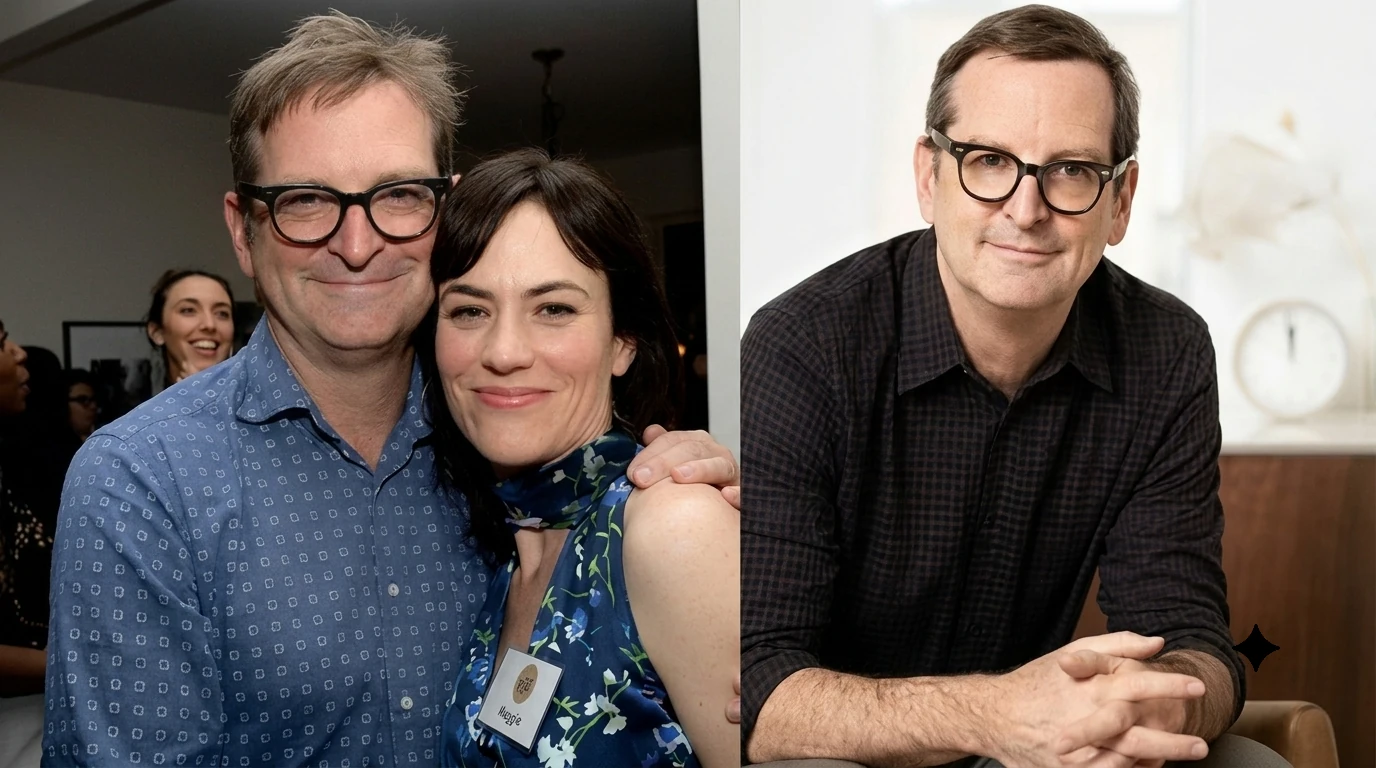
Paul Ratliff was best known publicly as the husband of actress Maggie Siff, but his own career followed a serious and people-centered path. He worked in ethnographic research and design strategy before later entering marriage and family therapy in New York. His life remained largely outside celebrity culture, and much of what is known comes from professional records, public reporting about Siff, and coverage published after his death from brain cancer in 2021.
That limited public record has led to confusion online. Some websites have mixed him up with a former Major League Baseball player of the same name, while others have published unsupported claims about his age, education, wealth, and early life. A careful biography must therefore distinguish verified information from details that have never been publicly confirmed.
Who Was Paul Ratliff?
Paul Ratliff was an American researcher, consultant, design strategist, and marriage and family therapy provider. Professional records identify him as Paul Perkins Ratliff in connection with his therapy work, while other public references use the shorter name Paul Ratliff.
His earlier career centered on ethnography and design. In that field, researchers study how people behave, make decisions, use products, and respond to services or environments. Ratliff’s work placed him among professionals who brought observation and social research into business and design projects.
He later appeared in New York health-care provider records as a marriage and family therapy practitioner. That shift suggested a move from studying human behavior in organizational and design settings to working more directly with relationships and personal experience.
Ratliff became more widely known through his marriage to Maggie Siff, the actress recognized for her roles in Mad Men, Sons of Anarchy, and Billions. The couple had one daughter, Lucy, and kept most of their family life private.
Early Life and Family Background
Paul Ratliff’s date of birth, age, birthplace, nationality details beyond his American professional life, and family background have not been reliably documented in strong public sources. Many biography websites provide exact ages or personal histories, but those claims are often presented without records or named sources.
There is also no dependable public account of his parents, siblings, childhood, or upbringing. Ratliff did not build a public career around personal publicity, and he appears to have kept his background separate from his professional work and his wife’s acting career.
That lack of information should not be treated as a mystery. It simply reflects the life of a private person whose name became searchable because of his marriage to a well-known performer.
Education and Professional Training
Ratliff’s full educational history is not publicly confirmed. Online profiles sometimes name schools or degrees, but the available record does not support repeating those details as established fact.
His career in ethnographic research and design strategy would have required strong skills in observation, interviewing, analysis, and the interpretation of human behavior. His later work in marriage and family therapy also indicates formal clinical education and supervised professional training.
Public provider records list him with the credential MFT-LP. In New York, that abbreviation generally refers to a marriage and family therapist working under a limited permit while completing licensing requirements. The record confirms his professional direction, but it does not provide a complete account of his academic path.
Career in Ethnographic Research
One of the clearest records of Ratliff’s professional life comes from the Ethnographic Praxis in Industry Conference, commonly known as EPIC. A 2014 conference profile described him as an independent ethnographic researcher and design strategist.
The same professional biography stated that he joined E-Lab in 1996. E-Lab was known for applying ethnographic methods to business and design questions, helping companies understand how people actually used products and services rather than relying only on surveys or sales data.
Ratliff later worked as Senior Manager of Experience Modeling for Sapient London. Sapient was a consulting and technology company that incorporated research, digital strategy, and customer experience into its work for large organizations.
By 2002, according to the EPIC profile, Ratliff had become an independent design and innovation consultant. His work appears to have focused on using field research to identify patterns in human behavior and translate them into practical ideas for organizations.
This kind of research often involves observing people in real settings, conducting interviews, and studying how social habits affect decisions. Ratliff’s professional background placed him in a field that values close listening and careful interpretation rather than quick assumptions.
His Work at EPIC
Ratliff’s 2014 EPIC contribution was titled “Collateral Revelation.” The presentation examined how ethnographic fieldwork can affect not only the people being studied but also the researchers conducting the work.
That subject offered a useful view of his professional interests. He was not focused only on commercial outcomes or product design. He also considered the emotional and personal impact of research itself.
Ethnographers often enter homes, workplaces, or other private settings to understand how people live. Ratliff’s presentation addressed the idea that this process can change the observer as well as the participant. That concern with relationships, empathy, and personal experience also helps explain why his later move toward therapy was not entirely disconnected from his earlier career.
Transition to Marriage and Family Therapy
Ratliff later pursued work in marriage and family therapy in New York. Public National Provider Identifier records list Paul Perkins Ratliff as an individual provider in the marriage and family therapist category.
His NPI was assigned in January 2020. The record listed a New York practice address and identified him with the MFT-LP credential.
Marriage and family therapists work with individuals, couples, and families on communication, conflict, emotional distress, and relationship patterns. The public record does not reveal Ratliff’s clients, treatment methods, or clinical specialties, and that information would normally remain confidential.
Still, his move into therapy fits a broader professional pattern. Both ethnography and family therapy require careful attention to how people describe their lives, how relationships shape behavior, and how context affects individual decisions.
Marriage to Maggie Siff
Paul Ratliff married Maggie Siff, an American actress whose work spans television, film, and theater. Public biographical sources commonly report that the couple married in 2012.
Siff had already gained recognition for playing Rachel Menken, a department-store heiress and romantic interest of Don Draper, in Mad Men. She later became widely known as Dr. Tara Knowles on Sons of Anarchy and as performance coach Wendy Rhoades on Billions.
Despite Siff’s public career, the couple did not make their marriage a regular subject of entertainment coverage. Ratliff rarely appeared in interviews, and the pair did not build a public identity around red carpets, endorsements, or social media.
Their relationship became part of public discussion mostly through brief biographical references and later through Siff’s reflections on grief after Ratliff’s death.
Daughter and Family Life
Ratliff and Siff had one daughter, Lucy. Siff’s pregnancy became public in 2013, and Lucy’s birth was reported in April 2014.
The family kept details about Lucy’s life private. There is no responsible basis for publishing information about her schooling, personal interests, or daily life.
Ratliff’s role as a father is part of his biography, but the family’s privacy should remain central. His daughter was still young when he died, and neither she nor Siff has turned that loss into ongoing public content.
Illness and Death
Paul Ratliff died in 2021 after brain cancer. The news became more widely known through later reporting about Maggie Siff’s stage work.
Coverage of Siff’s 2023 appearance in Tennessee Williams’s Orpheus Descending described how Ratliff’s illness and death affected her relationship with the play. The drama centers partly on a woman living with a dying husband, making the material especially difficult for Siff after caring for Ratliff during his illness.
Public reporting stated that she had cared for him for about a year. After his death, she initially believed she would not be able to perform the play.
The exact type of brain cancer, date of diagnosis, treatment history, and date of death have not been publicly confirmed in reliable detail. Those medical facts remain private, and claims that go beyond the established record should be treated cautiously.
Maggie Siff’s Return to the Stage
Siff returned to Orpheus Descending in 2023 in a Theatre for a New Audience production directed by Erica Schmidt. Her decision to take the role gave the public one of the clearest glimpses into how Ratliff’s death had shaped her life.
The production ran in Brooklyn during the summer of 2023. Siff’s performance drew attention not only because of her television career but also because of the personal weight she brought to the material.
Her comments around the production did not turn Ratliff’s illness into spectacle. Instead, they showed how private grief can alter an artist’s understanding of a role.
That connection is now part of Ratliff’s public legacy. Although he was not an actor, his life and death affected one of Siff’s most emotionally demanding stage performances.
Public Image and Reputation
Paul Ratliff did not maintain a conventional public image. He was neither a celebrity spouse who regularly appeared in entertainment media nor a public figure who promoted his own personal brand.
The available professional record presents him as thoughtful and academically engaged. His work in ethnography dealt with the effects of observation, human contact, and research, while his later clinical path focused on relationships and emotional life.
It would be easy to turn those facts into broad claims about his personality, but the evidence does not support that. Few direct quotes, interviews, or personal profiles are publicly available.
What can be said is that his career repeatedly involved close attention to people. His professional life moved through research, consulting, and therapy, all fields that depend on listening and interpretation.
Confusion With the Baseball Player Paul Ratliff
Paul Ratliff, Maggie Siff’s husband, is sometimes confused with Paul Hawthorne Ratliff, a former Major League Baseball catcher. They were different people.
Paul Hawthorne Ratliff was born in 1944 and played professional baseball for the Minnesota Twins and Milwaukee Brewers. His career began in the 1960s and is documented in official baseball records.
Maggie Siff’s husband worked in ethnographic research, design strategy, consulting, and therapy. There is no evidence that he had a professional baseball career.
The confusion has led some online profiles to attach the baseball player’s birth date, age, or career to Siff’s husband. Those claims are incorrect.
Net Worth and Income Sources
Paul Ratliff’s net worth was not publicly confirmed. Estimates published by celebrity biography websites are not supported by financial disclosures, contracts, property records, or other dependable evidence.
His known income sources would have included professional work in research, design consulting, and later marriage and family therapy. Independent consulting can vary widely in earnings depending on clients, projects, location, and experience.
Therapy income also depends on licensing status, caseload, fees, insurance arrangements, and the amount of time spent in practice. The available public record does not provide enough information to calculate Ratliff’s earnings.
Any precise net worth figure should therefore be treated as speculation. A responsible biography can identify his professions, but it cannot assign a credible dollar value to his estate.
Current Status and Recent Updates
Paul Ratliff is not living. He died from brain cancer in 2021.
There were no personal career updates in 2024, 2025, or 2026 because his professional life ended before those years. Recent searches for his name are usually connected to continuing interest in Maggie Siff, repeat coverage of her family life, or renewed attention to her theater and television work.
No major new public disclosures about Ratliff’s early life, education, finances, or medical history have been confirmed. His biography remains based on a small but meaningful set of professional and family facts.
Frequently Asked Questions
Who was Paul Ratliff?
Paul Ratliff was an American ethnographic researcher, design strategist, consultant, and marriage and family therapy provider. He was also the husband of actress Maggie Siff.
What was Paul Ratliff’s full name?
Professional provider records identify him as Paul Perkins Ratliff. He was commonly referred to publicly as Paul Ratliff.
How old was Paul Ratliff?
His date of birth and age were not publicly confirmed in reliable sources. Ages published on unsourced biography websites should not be treated as established fact.
What did Paul Ratliff do for a living?
He worked in ethnographic research and design strategy, including roles connected with E-Lab and Sapient London. He later became an independent consultant and pursued marriage and family therapy in New York.
Was Paul Ratliff married to Maggie Siff?
Yes. Public biographical accounts report that Paul Ratliff and Maggie Siff married in 2012. They remained together until his death in 2021.
Did Paul Ratliff have children?
Yes. He and Maggie Siff had one daughter, Lucy, whose birth was announced in 2014.
How did Paul Ratliff die?
Paul Ratliff died from brain cancer in 2021. The exact diagnosis and treatment details were not publicly disclosed.
What was Paul Ratliff’s net worth?
His net worth was not publicly confirmed. Online estimates lack reliable financial documentation and should be treated as speculation.
Conclusion
Paul Ratliff’s life cannot be reduced to his marriage to a successful actress. He built a career around the study of human behavior, first through ethnographic research and design strategy and later through work in marriage and family therapy.
His public record is smaller than many online biographies suggest. Key details about his birth, education, finances, and family background remain private or unverified, while the strongest evidence documents his professional path, marriage, fatherhood, and death from brain cancer.
That restraint gives a more accurate picture than speculation does. Ratliff appears to have lived as a private professional beside a public figure, maintaining a career and family life without seeking celebrity attention.
His story matters because it shows the limits of what the public can responsibly claim about someone who never made his private life a public product. What remains is a portrait of a researcher, therapist, husband, and father whose work and relationships continued to influence those around him after his death.